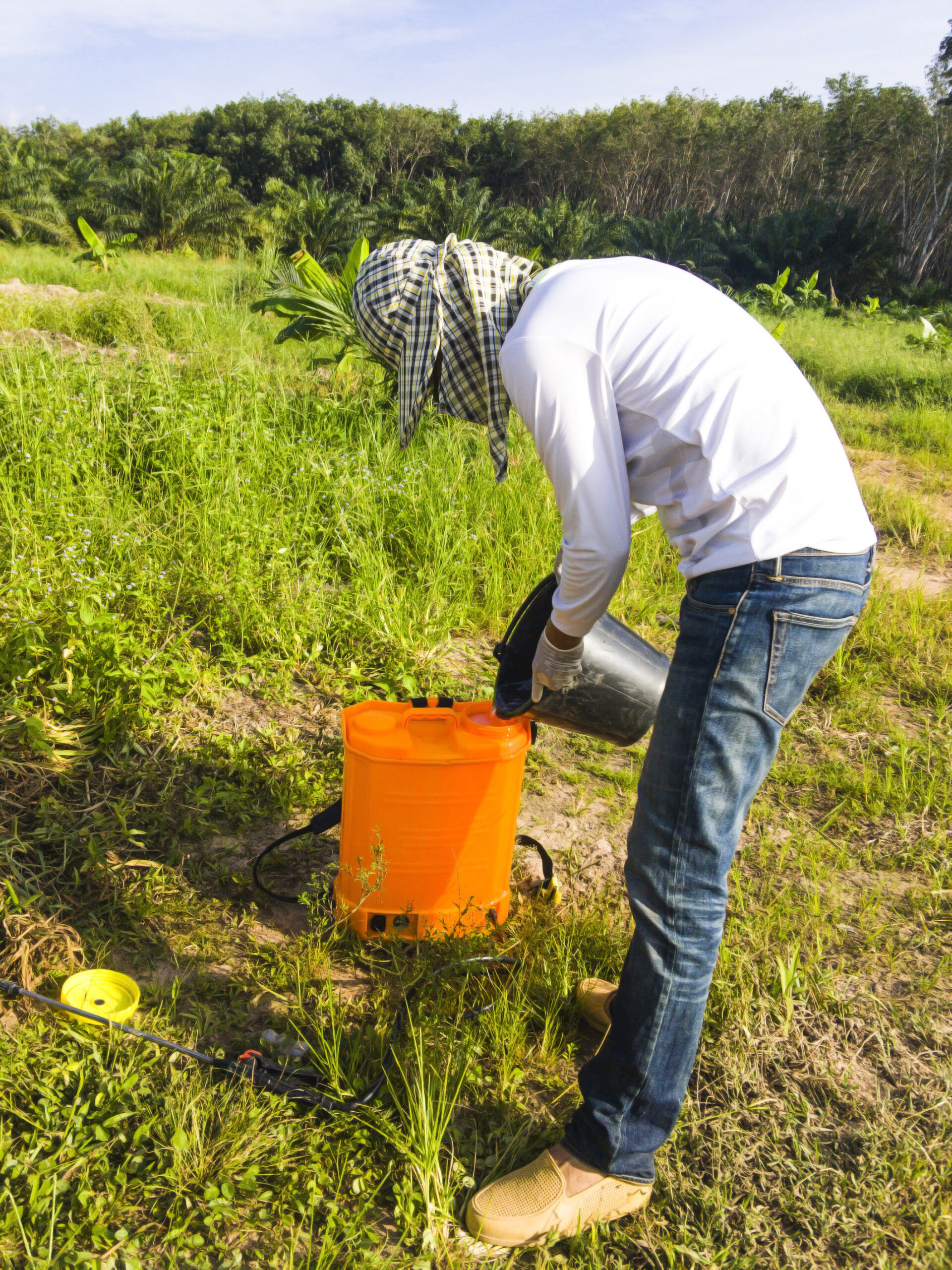
A California man who sprayed atrazine weedkillers for nearly three decades has filed an atrazine lawsuit against Syngenta. The lawsuit alleges the company failed to warn applicators that its herbicides could cause non-Hodgkin lymphoma (NHL), a cancer of the immune system.
Wisner Baum filed the complaint, Panayiotou v. Syngenta AG (Case No. 2:26-cv-11652), on October 6, 2026, in the U.S. District Court for the Central District of California. The suit names Syngenta AG and Syngenta Crop Protection, LLC as defendants and demands a jury trial.
What the Syngenta Atrazine Lawsuit Alleges
Plaintiff Apostolos Panayiotou mixed, loaded, sprayed, and applied atrazine products in Los Angeles County for approximately three decades. According to the complaint, that exposure caused his non-Hodgkin lymphoma.
The complaint alleges that atrazine products enter the body through skin contact, inhalation of spray droplets and vapor, and ingestion. It further alleges that surfactants and other ingredients in Syngenta’s formulated products increase how much atrazine the body absorbs.
The suit brings claims under California law for strict liability (design defect and failure to warn) and negligence. It seeks compensatory and punitive damages.
“Mr. Panayiotou handled these products year after year, exactly as they were intended to be used, and he developed cancer,” said Wisner Baum partner Pedram Esfandiary.
Syngenta’s product labels are approved by the U.S. Environmental Protection Agency (EPA). But the complaint notes that the EPA does not regulate a manufacturer’s advertising, sales pitches, websites, or applicator training.
According to the complaint, Syngenta never used any of those channels to warn Panayiotou, or any other user, that atrazine exposure was linked to an increased risk of NHL or any other cancer. The lawsuit alleges that when those communications addressed safety at all, they minimized and denied the risk. Panayiotou says he would not have bought or used the products had he been warned.
“Syngenta had information these workers needed to protect themselves, and it failed to share it,” said Wisner Baum senior partner Timothy A. Loranger. “Mr. Panayiotou and others deserved better.”
The complaint also alleges Syngenta could have reduced or eliminated the cancer risk with safer formulations, low-dust or encapsulated products, and closed-transfer packaging that limits contact during mixing.
What Does the Science Say About Atrazine and Cancer?
On November 21, 2025, the International Agency for Research on Cancer (IARC), the World Health Organization’s cancer research agency, classified atrazine as “probably carcinogenic to humans” (Group 2A). IARC found sufficient evidence of cancer in experimental animals, strong mechanistic evidence, and limited evidence in humans. The strongest human link involved NHL that carries the t(14;18) chromosomal translocation, a genetic change common in certain lymphoma subtypes.
A 2001 study published in Epidemiology linked atrazine use to t(14;18)-positive NHL. A 2003 pooled analysis of National Cancer Institute studies, published in Occupational and Environmental Medicine, reported a positive association between atrazine and NHL.
The European Union banned atrazine in 2004. Atrazine is also not permitted for general agricultural use in Switzerland, where Syngenta AG is headquartered. In the United States, the EPA still allows its use as a restricted-use pesticide.
Did Syngenta Try to Shape the Science on Atrazine?
The complaint accuses Syngenta of a sustained campaign to “shape, suppress, and discredit the science” on atrazine. According to the lawsuit, Syngenta never studied whether the farmers and applicators who use its products develop NHL at higher rates.
The complaint cites documents unsealed in earlier atrazine water-contamination litigation and reported in the national press. According to the lawsuit, those documents revealed a plan to discredit Dr. Tyrone Hayes, a UC Berkeley scientist whose research found atrazine harmed frogs at very low doses. The suit also alleges Syngenta kept a roster of more than 130 experts and commentators who defended atrazine without disclosing their financial ties to the company.
Who May Qualify for an Atrazine Lawsuit?
Wisner Baum is investigating claims against atrazine manufacturers, including Syngenta, Corteva Agriscience, and BASF. You may qualify if:
- You were diagnosed with non-Hodgkin lymphoma or aggressive (high-grade) prostate cancer.
- You were repeatedly exposed to atrazine through farm work, crop spraying, groundskeeping, golf course maintenance, or municipal or roadside spraying.
- You lost a loved one to one of these cancers after atrazine exposure (a wrongful death claim).
The Syngenta atrazine litigation is in its early stages, and no federal MDL (multidistrict litigation) has been established.
Wisner Baum Investigating Syngenta
Wisner Baum has experience taking on major agrichemical corporations. In 2018, a San Francisco jury in Johnson v. Monsanto Company ordered the company to pay $289.25 million to Dewayne “Lee” Johnson; the award was later reduced to $20.5 million on appeal. In 2019, a jury in Pilliod et al. v. Monsanto Company ordered the company to pay $2.055 billion to Alva and Alberta Pilliod; the court later reduced the award to $86.7 million. R. Brent Wisner served as co-lead trial counsel in both cases.
Since 1985, Wisner Baum has earned more than $4 billion in verdicts and settlements. We handle atrazine cases on a contingency basis. If we do not win your case, you do not owe us anything.
We know a cancer diagnosis turns your life upside down. We are taking on this litigation to help people find out what Syngenta knew about the risks of atrazine exposure and to hold the company accountable.
If atrazine exposure may have caused your cancer, you may be eligible to pursue compensation. Call (310) 207-3233 for a free, confidential case evaluation.