No Fees Unless We Win
(310) 207-3233
Menu

Nexium Stomach Cancer Lawsuit

People throughout the country who were diagnosed with stomach cancer after taking Nexium (esomeprazole) are filing lawsuits against AstraZeneca and Merck Sharp & Dohme. 

If you or someone in your family was diagnosed with stomach (gastric) cancer after taking Nexium, you may qualify for a lawsuit. Wisner Baum is filing these claims nationwide. Call (310) 207-3233 or contact us for a free, confidential case evaluation.

What Is Nexium (Esomeprazole)?

Nexium is a proton pump inhibitor (PPI), a class of drugs that sharply reduce the amount of acid the stomach produces. The heartburn drug’s active ingredient is esomeprazole magnesium. AstraZeneca began selling prescription Nexium in 2001 and marketed it aggressively as “the purple pill,” positioning it as the successor to its earlier blockbuster PPI, Prilosec (omeprazole). According to PPI attorneys, AstraZeneca developed Nexium through an internal program it called “Operation Shark Fin” to hold onto the lucrative heartburn market as Prilosec's patent neared expiration.

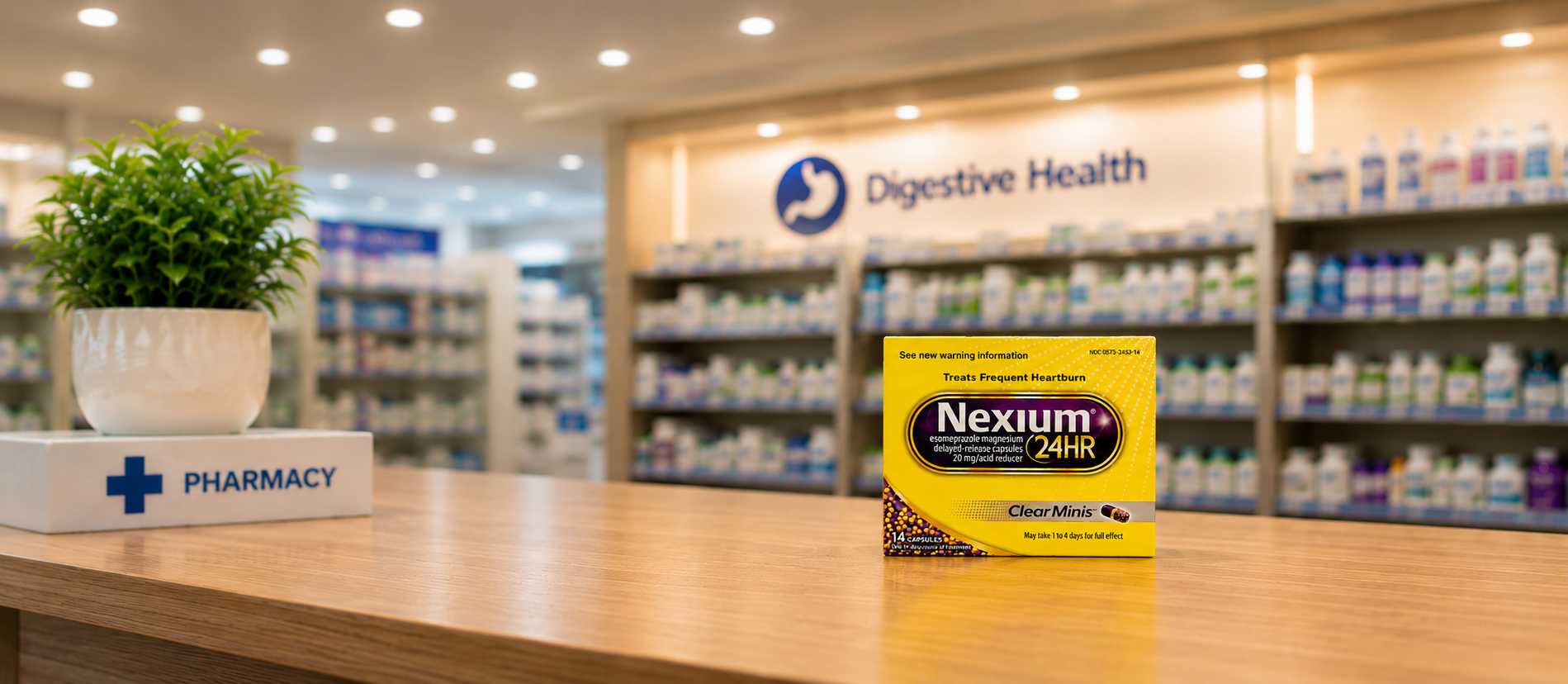
Doctors prescribe Nexium for GERD (gastroesophageal reflux disease, or chronic acid reflux), heartburn, and ulcers. It is sold both by prescription and over the counter as Nexium 24HR, and comes in several forms, including capsules and an intravenous (IV) formulation.

Nexium was developed and marketed under a decades-long partnership between AstraZeneca and Merck. According to attorneys, Merck earned at least $12 billion from Nexium and Prilosec sales between 2002 and 2014 and held a financial interest in Nexium until 2018. Both AstraZeneca and Merck Sharp & Dohme are named as defendants in Nexium lawsuits.

Nexium and Stomach Cancer: The Evidence

Like all PPIs, Nexium works by shutting down acid production in the stomach. The problem, Nexium lawsuits allege, is what happens when people use the drug long term. When acid stays suppressed, the body produces more of a hormone called gastrin, leading to a condition known as hypergastrinemia (chronically elevated gastrin). Gastrin is a growth-promoting hormone, and researchers have long recognized that sustained high levels can overstimulate certain stomach cells (called ECL cells), driving them to multiply and, over time, potentially undergo cancerous changes. According to lawsuits, Nexium raised patients' gastrin levels by more than threefold after just four weeks of treatment.

Scientists have described a second pathway as well: because PPIs strip away the stomach's protective acid, bacteria can overgrow in the stomach and produce nitrosamines, which are known cancer-causing compounds.

Esomeprazole lawsuits allege the drug’s design creates a further problem. When a patient stops taking Nexium, acid production can surge back above normal — a phenomenon called “rebound acid hypersecretion” — which brings back the very symptoms the drug was meant to treat. According to a July 2026 complaint, this creates a “dependence loop” that pushes patients into long-term use, and it is long-term use that the lawsuits allege drives the increased cancer risk.

Medical Research Linking Nexium and Gastric Cancer

A substantial body of peer-reviewed research has examined the connection between long-term PPI use and stomach cancer:

  • A 2006 study published in the journal Gut found that people who used PPIs for more than three years had roughly triple the risk of non-cardia gastric cancer compared to users of older H2-blocker heartburn drugs.
  • A 2017 nationwide Swedish study published in BMJ Open reported that long-term “maintenance” PPI users had about three times the risk of a gastric cancer diagnosis.
  • A 2018 study in Gut found that among patients who had undergone H. pylori eradication therapy, the risk of gastric cancer was more than eight times higher in those who continued daily PPI use for three or more years compared to non-users.
  • A 2025 review in BMJ Open Gastroenterology found that 20 of 21 meta-analyses reported elevated gastric cancer risk. The authors concluded the evidence was “quite convincing for a potential causal association.”

Why People Are Filing Nexium Lawsuits

The Nexium stomach cancer lawsuits are product liability claims. According to one of the early Nexium stomach cancer lawsuits, AstraZeneca and Merck knew or should have known that long-term Nexium use was associated with gastric cancer, based on animal studies, case reports, and published research, yet failed to warn patients and their doctors.

Nexium attorneys specifically allege that:

  • The prescription Nexium label warns that the drug can mask an existing stomach malignancy, but does not warn that long-term use may itself be associated with developing gastric cancer.
  • The over-the-counter Nexium 24HR label contains no warning about stomach cancer at all.
  • The labels fail to warn about “rebound acid hypersecretion” — a surge of acid that can occur when a patient stops the drug, which attorneys allege creates a “dependence loop” that pushes patients into long-term use tied to cancer risk.

Nexium stomach cancer lawsuits allege failure to warn, design defect, negligence, fraudulent concealment, breach of warranty, and in some cases, wrongful death. Attorneys further allege that safer alternative treatments for acid reflux were available. 

AstraZeneca's History With PPI Kidney Injury Litigation

This is not the first time AstraZeneca has faced lawsuits over its PPIs — but it is important to understand the difference. In earlier litigation, patients alleged that Nexium and Prilosec caused kidney injuries such as chronic kidney disease. Those cases were consolidated into a multidistrict litigation (MDL) in New Jersey, and in October 2023, AstraZeneca agreed to pay $425 million to resolve thousands of those kidney claims.

That litigation involved a different injury — kidney damage, not stomach cancer — and it is largely resolved. The Nexium stomach cancer lawsuits are separate, newer, and built on different scientific evidence. 

Diagnosed with stomach cancer after taking Nexium? Call (310) 207-3233 or contact us for a free, confidential case review.

Do I Qualify for a Nexium Stomach Cancer Lawsuit?

You may be eligible to pursue a Nexium stomach cancer lawsuit if the following generally apply to you or a family member:

  • Took Nexium (esomeprazole) or generic esomeprazole — by prescription or over the counter (Nexium 24HR).
  • Used the drug for a meaningful period, often about a year or longer.
  • Was diagnosed with stomach or gastric cancer (such as gastric adenocarcinoma).
  • Received the diagnosis within the deadline (statute of limitations) that applies in your state.

Both prescription and over-the-counter Nexium use may qualify for a lawsuit. The only way to know whether you have a case is to have an attorney review your specific history — a free case review can tell you where you stand at no cost or obligation.

Compensation in a Nexium Lawsuit

While no outcome can be guaranteed, plaintiffs in cases like these may be able to recover compensation for medical and cancer-treatment costs, lost wages and earning capacity, physical pain and emotional distress, and — in wrongful death cases — funeral expenses and a family's loss of their loved one's companionship. Where the evidence supports it, punitive damages may also be available; a complaint filed in July of 2026 alleges the manufacturers' conduct was reckless and seeks punitive damages. The value of any individual claim depends on that person's specific circumstances.

Is There a Deadline to File a Nexium Lawsuit?

Pursuing a Nexium lawsuit starts with a free consultation, followed by gathering your pharmacy and medical records and filing an individual claim. Each state sets a statute of limitations — a strict deadline to file, often just a few years from the date of diagnosis or from when the injury was reasonably linked to the drug. Once that deadline passes, the right to sue can be lost. Because these deadlines can be shorter than people expect, it is important to speak with an attorney promptly.

Why Choose Wisner Baum for Your Nexium Stomach Cancer Claim

Wisner Baum has represented people harmed by dangerous drugs and defective products since 1985. The firm has earned more than $4 billion in verdicts and settlements for thousands of clients nationwide.

Its trial record includes landmark results against major manufacturers. In the Roundup litigation, managing partner R. Brent Wisner served as co-lead trial counsel in Pilliod v. Monsanto, where a California jury returned a $2.055 billion verdict (later reduced by the court). 

Wisner Baum handles these cases on a contingency-fee basis: if we do not win your case, you do not owe us any attorney's fees.

Free Nexium Lawsuit Case Evaluation

If you or someone you love was diagnosed with stomach cancer after taking Nexium, you may be entitled to compensation. The pharmaceutical attorneys at Wisner Baum are reviewing these claims now. Call (310) 207-3233 or contact us for a free, confidential case evaluation online. There are no attorneys’ fees unless we win your case.

Get Started
Call (310) 207-3233 or fill out the form below and request a free consultation.
20,000+ Families Represented

"Wisner Baum gave exceptional attention to all aspects of the case, detailed inquiry, and tenacious overview of all the information submitted. The paralegals are efficient and diligent. I was completely surprised to find an empathic personal message to take care of my own health during the challenging time of being a full-time caretaker.*"

Mary Flores
Reviewed
on Google
Read More Reviews
Case Results
We Demand Accountability.
More Successful Results
$2.0 Billion Verdict
Personal Injury
In May of 2019, the jury in the case of Pilliod et al. v, Monsanto Company ordered the agrochemical giant to pay $2.055 billion in damages to the plaintiffs, Alva and Alberta Pilliod, a Bay Area couple in their 70s. R. Brent Wisner served as co-lead trial attorney for the Pilliods, delivering the opening and closing statements and cross-examining several of Monsanto’s experts. Wisner Baum managing shareholder, Michael Baum and attorney Pedram Esfandiary also served on the trial team in the Pilliod case. The judge later reduced their award to $87M. Monsanto appealed the Pilliod’s verdict which the California Court of Appeal for the First Appellate District denied on August 9, 2021. Monsanto then requested the California Supreme Court review the appeal’s court decision, which the court denied on Nov. 17, 2021. Monsanto (Bayer) then submitted a petition for a writ of certiorari with the U.S. Supreme Court which SCOTUS denied on June 27, 2022, allowing the final judgment of $87M to remain intact.
Continue Reading
$2.0 Billion Verdict
Personal Injury

In May of 2019, the jury in the case of Pilliod et al. v, Monsanto Company ordered the agrochemical giant to pay $2.055 billion in damages to the plaintiffs, Alva and Alberta Pilliod, a Bay Area couple in their 70s. R. Brent Wisner served as co-lead trial attorney for the Pilliods, delivering the opening and closing statements and cross-examining several of Monsanto’s experts. Wisner Baum managing shareholder, Michael Baum and attorney Pedram Esfandiary also served on the trial team in the Pilliod case.

The judge later reduced their award to $87M. Monsanto appealed the Pilliod’s verdict which the California Court of Appeal for the First Appellate District denied on August 9, 2021. Monsanto then requested the California Supreme Court review the appeal’s court decision, which the court denied on Nov. 17, 2021. Monsanto (Bayer) then submitted a petition for a writ of certiorari with the U.S. Supreme Court which SCOTUS denied on June 27, 2022, allowing the final judgment of $87M to remain intact.

$289.2 Million Verdict
Personal Injury
$289.2 million jury verdict in Monsanto Roundup trial Wisner Baum co-represented Dewayne “Lee” Johnson in the first Roundup cancer lawsuit to proceed to trial. On Aug. 10, 2018, a San Francisco jury ordered Monsanto to pay $39.25 million in compensatory damages and $250 million in punitive damages to Mr. Johnson, a former groundskeeper who alleged exposure to Monsanto’s herbicides caused him to develop terminal non-Hodgkin lymphoma. Months after the jury verdict, the judge overseeing the trial reduced the punitive damages to $39.25 million. Mr. Johnson decided to accept the remittitur, bringing the adjusted amount awarded to Mr. Johnson $78.5 million. Monsanto (Bayer) appealed the verdict and Johnson cross appealed. On July 20, 2020, the First Circuit Court of Appeals upheld the verdict against Monsanto but reduced Mr. Johnson’s award to $20.5 million. The company chose not to take the case to the U.S. Supreme Court, ending the litigation.
Continue Reading
$289.2 Million Verdict
Personal Injury

$289.2 million jury verdict in Monsanto Roundup trial

Wisner Baum co-represented Dewayne “Lee” Johnson in the first Roundup cancer lawsuit to proceed to trial. On Aug. 10, 2018, a San Francisco jury ordered Monsanto to pay $39.25 million in compensatory damages and $250 million in punitive damages to Mr. Johnson, a former groundskeeper who alleged exposure to Monsanto’s herbicides caused him to develop terminal non-Hodgkin lymphoma.

Months after the jury verdict, the judge overseeing the trial reduced the punitive damages to $39.25 million. Mr. Johnson decided to accept the remittitur, bringing the adjusted amount awarded to Mr. Johnson $78.5 million.

Monsanto (Bayer) appealed the verdict and Johnson cross appealed. On July 20, 2020, the First Circuit Court of Appeals upheld the verdict against Monsanto but reduced Mr. Johnson’s award to $20.5 million. The company chose not to take the case to the U.S. Supreme Court, ending the litigation.

$265 Million Settlement
Fatal Train Crash
In 2016, Wisner Baum attorney Timothy A. Loranger and six other attorneys in the Plaintiffs’ Management Committee were able to secure a $265 million settlement for victims of the 2015 Amtrak 188 derailment in Philadelphia, one of the largest in the U.S. for 2016.
Continue Reading
$265 Million Settlement
Fatal Train Crash

In 2016, Wisner Baum attorney Timothy A. Loranger and six other attorneys in the Plaintiffs’ Management Committee were able to secure a $265 million settlement for victims of the 2015 Amtrak 188 derailment in Philadelphia, one of the largest in the U.S. for 2016.

Nexium Stomach Cancer Lawsuit FAQ

The Nexium kidney-injury lawsuits were largely resolved through settlements, including AstraZeneca's $425 million agreement in 2023. But the Nexium stomach cancer lawsuits are a separate and much newer effort — and they are not settled. These cases are just beginning to be filed, and new claims are being accepted now.

They are closely related. Nexium (esomeprazole) is essentially a refined version of Prilosec (omeprazole) — the two drugs are chemically almost identical, and both come from AstraZeneca. Because they work the same way, the research linking PPIs to stomach cancer applies to both. People who took either drug and developed stomach cancer may have a claim.

It may. Over-the-counter Nexium 24HR contains the same active ingredient as prescription Nexium. According to a July 2026 Nexium lawsuit, the OTC label carries no warning about stomach cancer at all. Long-term use of OTC Nexium can potentially support a claim, which an attorney can review during a free consultation.

Research points to increased risk with long-term use — often a year or more — with the risk rising as dose and duration increase. This is general research across large groups of people, not medical advice. If you took Nexium long-term and were diagnosed with stomach cancer, an attorney can help you understand whether your history may support a claim.

No. These are individual lawsuits that will become part of a mass tort, not a class action. Each person keeps their own separate case, and any potential compensation is based on their own diagnosis and injuries rather than divided across a group. As of 2026, no MDL has been established for these claims, so they are being filed individually.

When companies choose profit over people, we fight. Wisner Baum exposes injustice, demands accountability, and delivers real results for real people. Your Path to Justice Starts Here.
Los Angeles
11111 Santa Monica
Blvd Suite 1750
Los Angeles, CA 90025
Get Directions
Bay Area
100 Drakes Landing Road
Suite 160
Greenbrae, CA 94904
Get Directions
Washington, D.C.
2101 L St NW 

Suite 800
Washington, DC 20037
Get Directions
The information on this website is for general informational purposes only and does not constitute legal advice. Neither accessing this site nor reviewing its contents creates an attorney-client relationship, so please do not send confidential information until such a relationship is established in writing. This site may be considered attorney advertising. Prior results do not guarantee a similar outcome. Some matters may be handled with or referred to other firms as co-counsel.
Send Us Your Case Details
We’ll respond and let you know the best way to proceed with your case.
crossarrow-up
linkedin facebook pinterest youtube rss twitter instagram facebook-blank rss-blank linkedin-blank pinterest youtube twitter instagram