Wisner Baum represents families who have lost loved ones to cannabis-induced suicide. Our attorneys are pursuing wrongful death lawsuits against cannabis manufacturers, distributors, and others responsible for selling high-potency tetrahydrocannabinol (THC) products without adequate warnings about the serious psychiatric risks, including psychosis and suicide.
If you lost a family member to suicide following cannabis use, you may be entitled to compensation. Contact our firm for a free consultation by calling (310) 207-3233 or filling out our contact form. We handle these cases on contingency, which means you pay nothing unless we win.
What is the Cannabis Suicide Lawsuit About?
Cannabis products have undergone a dramatic transformation over the past several decades. The marijuana commonly consumed in the 1970s contained only a fraction of the THC levels found in today’s products. Modern cannabis is approximately ten times stronger than what was available in the 1970s and roughly three times more potent than products from the early 2000s.
Put simply, marijuana is stronger and more dangerous than it used to be. This large increase in potency carries serious psychiatric risks that the cannabis industry has failed to disclose. A person who consumes high-potency cannabis can be separated from reality and lose the capacity for rational judgment, trapped in a world where the drug overpowers their mind.
Wisner Baum’s cannabis suicide lawsuits target manufacturers and distributors who sell cannabis products without providing meaningful warnings about the risk of drug-induced psychosis and suicide. These companies profit from increasingly potent, increasingly addictive products while consumers remain unaware that cannabis can trigger acute psychiatric emergencies that may result in death. Those suffering from psychosis, including those in a cannabis-induced state, are much more likely to commit suicide.
How Cannabis Can Lead to Suicide
A person takes a cannabis edible, perhaps marketed as a “sleep” gummy or wellness product, believing it to be safe. Instead of relaxation, the high-potency THC overwhelms them, potentially causing drug-induced psychosis: anguish, confusion, fear. Cut off from reality and lacking the capacity for rational choice, the risk of suicide increases.
Wisner Baum represents a family whose teenage daughter died after consuming a cannabis edible. She was on her school’s dance team and planned to go to college. She had no history of suicidal ideation. One evening, she took a potent cannabis edible that was given to her as a supposed sleep aid.
The product did not help her sleep. It overwhelmed her. Instead of a relaxing night, she descended into psychosis, went to a nearby freeway overpass, and jumped to her death.
Her autopsy revealed no alcohol, no illegal street drugs, only a large amount of THC. The cannabis lawsuit alleges the product lacked meaningful warnings about the risk of psychosis or suicide and did not include instructions on what to do if someone “takes too much.” Had such warnings existed, the lawsuit alleges she would never have taken it.
As attorneys, we believe some simple steps could have prevented this incident, and many others like it, from happening:
- Warnings about psychosis and suicide risk;
- Instructions for what to do during a mental health crisis;
- Warnings about THC variability, particularly in edibles;
- Proper testing to ensure THC amounts matched the label;
- More robust age warnings for minors and young adults.
None of these steps were taken. This is why we are fighting for accountability.
The Scientific Evidence Linking Cannabis to Suicide
The connection between cannabis and suicide is supported by extensive peer-reviewed research. For years, the overwhelming scientific conclusion has been that cannabis meaningfully increases the risk of suicide—both from acute psychosis stemming from isolated use and from consumption over time. The risk is particularly pronounced for teenagers and young adults, whose developing brains are especially sensitive to THC.
This is not outdated drug war propaganda. This view is scientifically solid and has continued to grow stronger over time. Some of the studies that support this conclusion come from Johns Hopkins University, McGill University, the University of Colorado, the University of California, federal health agencies, and many other institutions. Below are some cited in cannabis suicide claims:
Han et al. (2021) – JAMA Network Open
"Associations of Suicidality Trends With Cannabis Use as a Function of Sex and Depression Status"
Key Facts:
- Massive dataset: Over 280,000 young adults (ages 18-34) from National Surveys on Drug Use and Health (2008-2019).
- Conducted by NIH/NIDA researchers: The federal government's drug research agency conducted the study.
- Found cannabis use is associated with higher suicidality even without depression.
- Women at higher risk: Women with cannabis use and depression had 52% higher suicide plan rates than men with the same conditions.
Key quote: “Cannabis use was associated with higher prevalence of suicidal ideation, plan, and attempt among US young adults with or without depression, and the risks were greater for women than men.”
Gobbi et al. (2019) – JAMA Psychiatry
"Association of Cannabis Use in Adolescence and Risk of Depression, Anxiety, and Suicidality in Young Adulthood"
Key Facts:
- Meta-analysis of 11 longitudinal studies with 23,317 individuals: This is not just one study; it is a review of the best available science.
- Found adolescent cannabis use was associated with 3.46x increased odds of suicide attempt.
- Found 1.50x increased odds of suicidal ideation.
- Controlled for baseline depression: The association held even when accounting for pre-existing mental health conditions.
- Population attributable risk of 7%: Estimated approximately 400,000 cases of young adult depression in the U.S. may be attributable to adolescent cannabis exposure.
Key quote: “Adolescent cannabis consumption was associated with increased risk of developing depression and suicidal behavior later in life, even in the absence of a premorbid condition.”
The simple truth is that while people who consume cannabis may never experience its most serious negative effects, a significant number of people will. This is a problem that has been getting worse as cannabis products become more potent.
Why Cannabis Potency Matters
THC is the principal psychoactive chemical in cannabis—what makes a user feel “high.” THC interacts directly with brain regions that regulate mood, perception, memory, judgment, and impulse control. At sufficiently high doses, THC can overwhelm the brain’s normal regulatory functions, particularly in adolescents and young people whose brains are still developing.
The USC Schaeffer Center issued a report warning that cannabis regulations are inadequate given the rising health risks of high-potency products. The commercial incentives in the legal cannabis market favor stronger products that produce more intense effects, which increase consumer demand and repeat use or addiction. This race toward ever-higher potency has outpaced both regulatory oversight and consumer understanding of the risks.
The result is that product labels typically fail to explain how THC affects the brain, how higher doses increase the risk of psychosis and suicide, or how different methods of consumption can dramatically alter the onset, intensity, and duration of intoxication.
The Unique Dangers of Cannabis Edibles
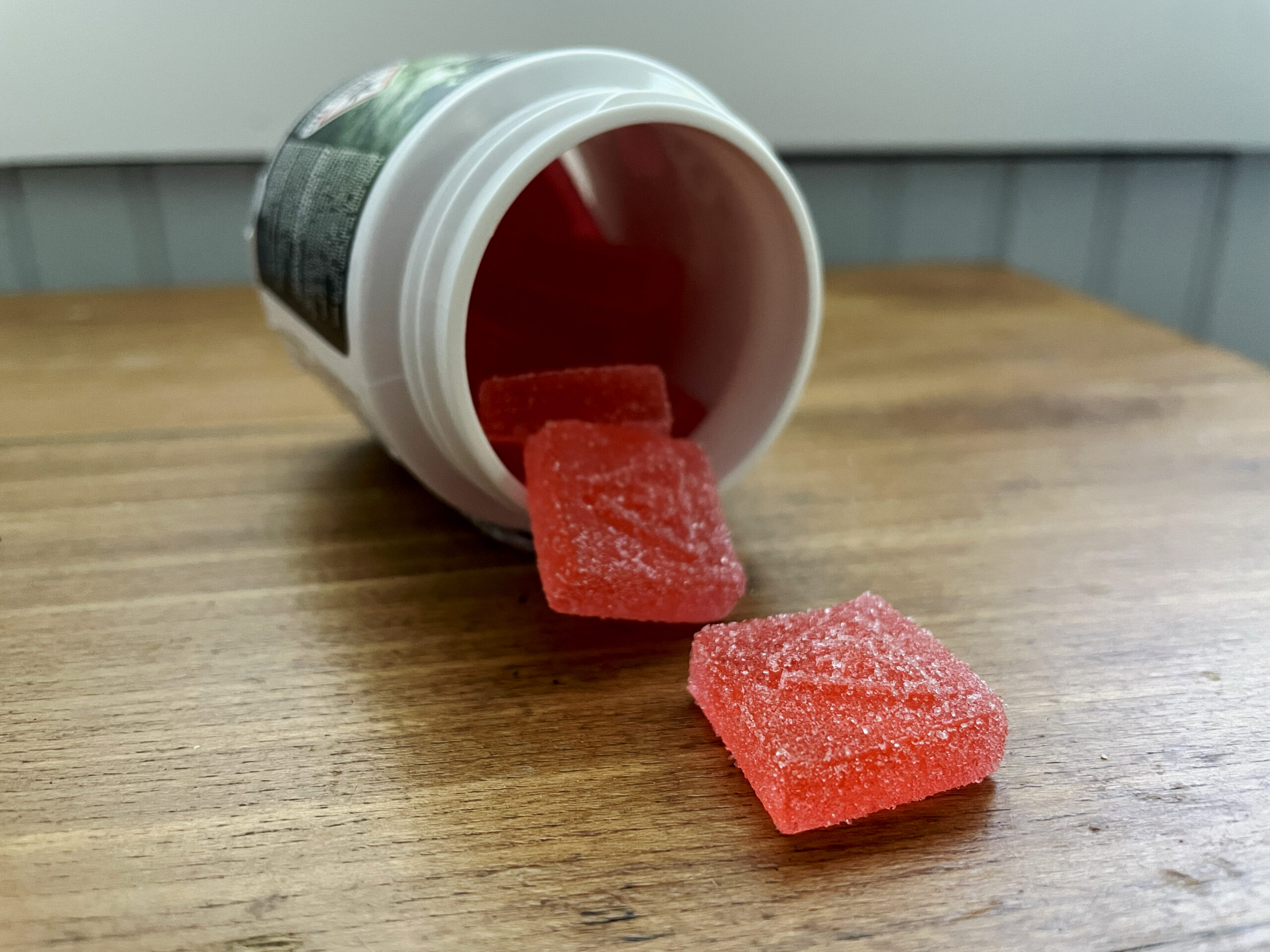
Although psychosis and suicide risk are real when consuming cannabis in any form, cannabis edibles present unique risks that are often not disclosed to consumers. Unlike smoking marijuana, where effects are felt relatively quickly, edibles take longer to produce noticeable effects, leading some users to consume additional doses before the initial dose takes effect. Additionally, THC may be unevenly distributed within a package or even among individual edibles, leading to ingestion of substantially more THC than intended or labeled.
Despite these known risks, cannabis attorneys allege that edibles are routinely marketed in packaging and with flavoring that closely resembles conventional candy and snack products. Although regulations prohibit calling such products “candy,” edibles are often sold in brightly colored, candy-like packaging and marketed using language emphasizing mouthwatering taste, relaxation, sleep, or wellness.
This marketing approach is not accidental. It reflects a broader industry strategy to normalize cannabis consumption while obscuring its dangers. The overall effect is to present cannabis as a benign lifestyle product rather than as a powerful psychoactive substance with psychiatric risks that are well-documented in the scientific literature. When an edible is marketed as a “sleep” gummy or wellness product, consumers—especially young consumers—have no reason to suspect it could trigger a psychiatric emergency.
People who consume edibles are generally provided little or no meaningful warning that they are capable of causing acute psychosis, severe mental distress, or suicidal behavior. Nor are they warned about the unique risks of edible consumption: the delayed onset, the potential for THC variability, and the danger of taking more before the first dose takes effect.
The Cannabis Industry’s Failure to Warn
The legal cannabis industry is projected to generate hundreds of billions of dollars in revenue in the coming years. In this rapidly expanding, highly competitive, and volatile market, companies face intense pressure to increase potency, reduce costs, and maximize sales—often at the expense of consumer safety.
Cannabis suicide lawsuits allege manufacturers and distributors know, or should know, that their products carry serious psychiatric risks. The scientific literature is clear. Yet these companies are accused of consistently failing to provide adequate warnings about the risk of psychosis and suicide, failing to include instructions on what to do during a mental health crisis, failing to explain that young people are particularly vulnerable, and failing to warn about the unique risks of edible consumption.
Legal Basis for Cannabis Suicide Lawsuits
Wisner Baum’s cannabis wrongful death litigation pursues accountability through multiple legal theories:
Strict Products Liability – Failure to Warn: Cannabis products are defective and unreasonably dangerous when they lack adequate warnings about the risk of psychosis and suicide. Manufacturers have a continuing duty to warn consumers of known dangers, including the psychiatric risks associated with cannabis.
Strict Products Liability – Manufacturing Defects: Some cannabis products contain more THC than labeled, creating additional risk for consumers who believe they are consuming a specific dose. When a product deviates from its intended design or from other units in the same product line, it contains a manufacturing defect.
Negligence: Cannabis manufacturers have a duty of reasonable care in researching, testing, developing, designing, manufacturing, labeling, marketing, and distributing their products. The risk of suicide is inherent in cannabis products, and a reasonable manufacturer would take steps to warn consumers and minimize this risk.
Wrongful Death: When a manufacturer’s or distributor’s negligent conduct directly and proximately causes a death, surviving family members may pursue a THC wrongful death lawsuit. Family members have been permanently deprived of their loved one’s companionship, comfort, care, and moral support.
Who May Qualify for a Cannabis Suicide Lawsuit
If you lost a family member to suicide after they used a cannabis product, contact an attorney to learn more about your legal rights.
Each case requires careful, thoughtful review of the specific product involved, the warnings provided (or not provided), and the events leading to the death. Wisner Baum attorneys are here to help you. Contact us whenever you are ready.
Why Choose Wisner Baum
Wisner Baum has a proven track record of holding manufacturers accountable for dangerous products. Our attorneys have recovered over $4 billion in verdicts and settlements across all practice areas and have spent more than 40 years leading complex product liability litigation.
We understand the unique challenges in cannabis litigation. Our firm has the resources to investigate these cases thoroughly, retain qualified experts, and pursue claims against well-funded defendants. We also understand the sensitivity required when working with families who have experienced such devastating loss.
Call (310) 207-3233 or fill out our contact form to schedule a free, confidential consultation.