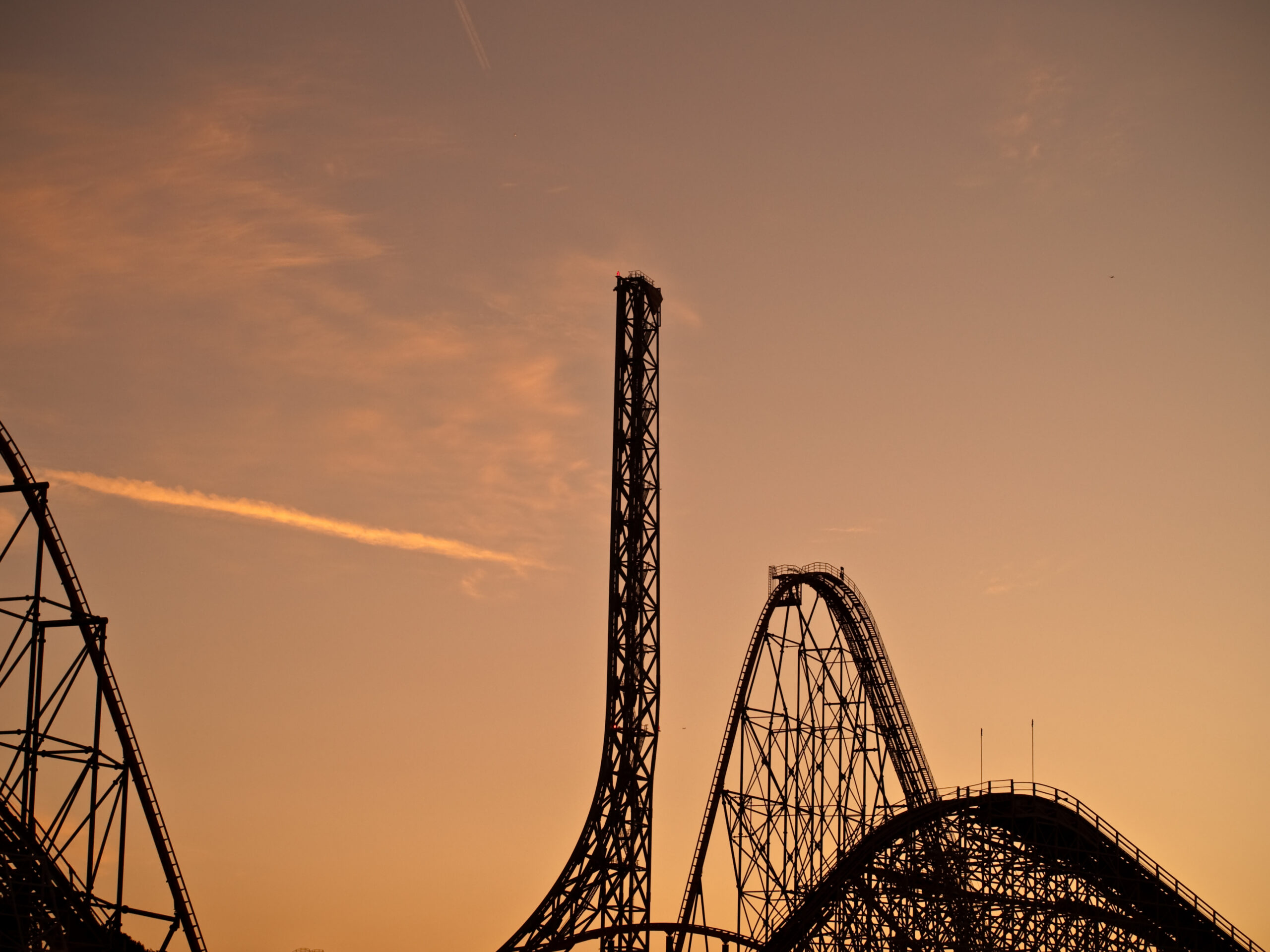
According to a CNN investigation, riders have reported serious head and neck injuries, hospitalizations, permanent disabilities, and deaths following rides on X2 at Six Flags Magic Mountain in Valencia, California. Recent reports have raised renewed questions about the forces riders experience and what Six Flags knew about prior incidents involving the coaster.
Wisner Baum represented Anne and William Hawley after their 22-year-old son, Christopher, suffered a catastrophic subdural hematoma and died after riding X2 in June 2022. Our attorneys investigated the ride, obtained internal records, worked with medical, engineering, and amusement-ride experts, and prepared the case for trial. In 2026, the matter was resolved to the Hawleys' satisfaction through confidential settlements with Magic Mountain LLC and the ride’s designer, S&S Worldwide. The settlement terms are confidential.
If you or someone in your family suffered persistent headaches, a seizure, vision problems, or another serious injury after riding X2, we are available to listen. Call (310) 207-3233 or contact us for a free and confidential case review. Even if you are uncertain whether the ride caused the injury or whether too much time has passed, we encourage you to speak with us.
If You Have Not Felt Right Since Riding X2, Do Not Ignore It
Roller coaster injuries, particularly traumatic brain injuries, are not always immediately apparent. Bleeding in or around the brain can begin with symptoms that a rider may mistake for fatigue, dehydration, motion sickness, or an ordinary headache after a long day at a theme park.
CNN reported that one of two women hospitalized after riding X2 in July 2026 was diagnosed with a traumatic subdural hematoma. According to the report, she did not go to the emergency room until her head pain and light-headedness had continued for nine days.
If you rode X2 and experienced any of the following symptoms, consult a medical professional:
- A headache that does not go away or continues to worsen
- Dizziness, light-headedness, or difficulty with balance
- Nausea or repeated vomiting
- Confusion, difficulty concentrating, or mental fogginess
- Memory problems
- Vision changes or slurred speech
- Unusual drowsiness or difficulty waking up
- Neck pain, numbness, tingling, or weakness in the arms or legs
Call 911 or go to an emergency room immediately following a loss of consciousness, a seizure, repeated vomiting, unequal pupil size, weakness on one side of the body, or an inability to wake the person. Symptoms that initially appear mild can become serious.
This information is not a substitute for medical advice. If you have new, persistent, or worsening neurological symptoms after riding X2, seek medical attention and tell the provider when you rode the coaster and when your symptoms began.
Christopher Hawley and the X2 Wrongful Death Case
On June 23, 2022, Christopher Hawley visited Six Flags Magic Mountain with his younger brother and a cousin. Christopher was 22 years old, had recently graduated from San Diego State University, and was beginning the next chapter of his life.
According to the lawsuit, X2 was extremely rough and jolted violently as it approached the end of the ride. After exiting, Christopher walked down the ramp using a handrail for support, told his brother and cousin that his head hurt, and then collapsed and lost consciousness. He was taken to Henry Mayo Newhall Hospital in Valencia. Imaging revealed a catastrophic subdural hematoma. Doctors performed emergency surgery, but Christopher died from his injuries.
The Los Angeles County Medical Examiner ruled Christopher's death an accident caused by blunt head trauma sustained in a park ride accident.
Christopher's parents brought wrongful death and survival claims in Los Angeles County Superior Court against Magic Mountain LLC, Six Flags Entertainment Corporation, and S&S Worldwide. The lawsuit asserted claims including strict product liability, negligent design, failure to warn, negligence, and premises liability.
Wisner Baum, Senior Partner Timothy A. Loranger and his team, represented the Hawley family and prepared the case for a Los Angeles County jury. In August 2026, shortly before trial, the claims against S&S Worldwide and Magic Mountain LLC were resolved to the Hawleys' satisfaction through confidential settlements. The terms of those settlements remain confidential. The family has asked for privacy as they move forward.
The 2026 Closure and Investigation of X2
Six Flags Magic Mountain closed X2 on the evening of July 12, 2026. Cal/OSHA's Amusement Ride and Tramway Unit, the state unit responsible for permanent amusement rides in California, opened an inspection concerning a reported incident involving X2. As of September 8, 2026, the agency stated that the inspection remained ongoing and that no additional details were available.
Two events preceded the closure. On July 5, 2026, the Los Angeles County Fire Department responded to the park following a report of an unconscious person, and Cal/OSHA representatives also responded. Separately, a fire beneath the coaster briefly halted the ride in June.
What the CNN Investigation Reported
On August 27, 2026, CNN published an investigation of X2 based on medical records, court filings, and deposition testimony. CNN reported:
- Two riders required emergency brain surgery within days of one another in July 2026. Both were treated at the same hospital and suffered similar brain hemorrhages. CNN reported that three treating neurosurgeons attributed the injuries to the forces experienced on X2 and described a traumatic rapid acceleration-deceleration mechanism.
- One of the two women remained in a coma weeks later. The other reportedly experienced memory loss, balance problems, and chronic migraines and was unable to complete nursing school.
- CNN identified more than a dozen reported serious injuries and hospitalizations involving X2 riders, including traumatic brain injuries, subdural hematomas, seizures, comas, severe headaches, memory loss, and balance problems.
- Court records discussed in the report identified two deaths following rides on X2: Hilda Farias in 2010 and Christopher Hawley in 2022.
- An expert retained in the Hawley case testified that Six Flags' internal records reflected at least 70 complaints of head or neck injuries involving X2 during the three years before Christopher's death.
- Court testimony indicated that after Magic Mountain notified Cal/OSHA of Christopher Hawley's injury, it was instructed to preserve the ride pending an investigation. Magic Mountain maintenance personnel then went on to replace a wheel on one of the train cars before Cal/OSHA arrived to inspect the ride, and regulators were not informed of the replacement.
What a company knew, when it knew it, and what it did in response are often central questions in an amusement-ride injury case.
How X2 Differs From a Conventional Roller Coaster
X2 is a fourth-dimension roller coaster. Its seats rotate 360 degrees independently of the track, flipping riders forward and backward while the train drops and turns. The ride travels approximately 3,600 feet, includes a drop of roughly 200 feet, and reaches speeds near 76 miles per hour.
That independent seat rotation distinguishes X2 from a conventional coaster and was central to the allegations in the Hawley lawsuit. The complaint alleged that X2 could cause a rider's head to accelerate in one direction while the body accelerated in another, creating a risk of dangerous head and neck movement.
The Hawley complaint also described X2's unusual design and operational history. The attraction opened as X in 2002, later closed for a substantial redesign, and reopened as X2 in 2008 with replacement trains supplied by S&S Worldwide. The complaint alleged that the ride as constructed and operated did not perform as smoothly as originally designed and subjected riders to violent and potentially dangerous forces. Six Flags disputed that X2 was unsafe.
Legal Rights After an Injury at Six Flags Magic Mountain
The claims available after an amusement-ride injury depend on the facts. Potential legal theories may include the following:
Roller Coasters as Common Carriers
In Gomez v. Superior Court (2005) 35 Cal.4th 1125, the California Supreme Court held that a roller coaster operator may be a "carrier of persons for reward" under California Civil Code section 2100. A common carrier must use the utmost care and diligence for the safety of its passengers. This is a higher duty than the ordinary reasonable-care standard governing most personal injury cases. Section 2101 also requires a carrier to provide vehicles that are safe and fit for their intended purpose.
Product Liability
A roller coaster and its trains contain products and component parts. Depending on the facts, strict product-liability claims may be brought against entities responsible for designing, manufacturing, supplying, or placing the ride or its components into the stream of commerce. A defective design claim may focus on whether the ride performed as safely as an ordinary consumer would expect or whether its risks outweigh its benefits. A failure-to-warn claim may arise when a serious risk is not obvious to an ordinary guest and the warnings do not adequately disclose it. Separate duties may apply to the park as the owner and operator of the ride.
Negligence and Premises Liability
A park has duties to inspect, maintain, and operate its rides safely and to protect guests from dangerous conditions. Evidence of prior similar incidents can be important in determining whether the park knew or should have known of a dangerous condition and whether its response was reasonable.
Punitive Damages
California Civil Code section 3294 permits punitive damages when the evidence establishes malice, oppression, or fraud, including a conscious disregard for the safety of others. Whether punitive damages are available depends on what the evidence shows about a company's knowledge, its response to prior incidents, and the decisions made after it learned of the risk.
Deadlines for Bringing a Magic Mountain Injury Claim
California's general deadline for filing a personal injury lawsuit is two years, but different rules may apply depending on the injured person's age, when the injury reasonably could have been discovered, the identity of the responsible parties, and other circumstances. Some claims require action much sooner.
Do not assume that you are too late to pursue a claim, and do not assume that you have plenty of time. Consult with a lawyer as soon as reasonably possible so the applicable deadlines can be evaluated and important evidence can be preserved.
Potential Compensation in an X2 Injury Case
The compensation available depends entirely on the facts and the evidence. Recoverable damages may include:
- Past and future medical expenses, including emergency care, neurosurgery, imaging, hospitalization, cognitive rehabilitation, and neurological monitoring
- Lost income and reduced earning capacity, including the inability to return to the same work or complete schooling or professional training
- Physical pain, mental suffering, and diminished quality of life
- Permanent disability and cognitive impairment, including memory loss, personality changes, or seizure disorders
- Loss of consortium suffered by a spouse
- Wrongful death damages, including funeral and burial expenses, loss of financial support, and loss of the decedent's love, companionship, comfort, care, assistance, protection, affection, society, and moral support
- Punitive damages when supported by the evidence
Why Choose Wisner Baum for Your X2 Lawsuit
We have firsthand experience litigating claims involving X2. We represented the Hawley family, conducted extensive discovery, worked with qualified experts, and prepared the case for a Los Angeles County jury before the matter was resolved to the Hawleys' satisfaction through confidential settlements.
We prepare cases for trial. Wisner Baum has recovered more than $4 billion in verdicts and settlements across our practice areas. We prepare every case with the goal of giving our clients the strongest opportunity for a just result.
We have handled catastrophic injury and wrongful death cases since 1985. Traumatic brain injury cases often require medical, neurological, biomechanical, engineering, life-care-planning, and economic expertise. Our firm has the experience and resources to investigate these cases thoroughly and take on powerful corporate defendants.
There is no upfront attorney's fee. The consultation is free, and we handle these cases on a contingency-fee basis. You do not pay an attorney's fee unless we obtain a recovery for you. We explain in writing how attorney's fees and case costs are handled before you decide whether to retain us.
Talk With a Law Firm That Knows X2
If you or someone you love suffered a head injury, brain injury, seizure, vision problem, neck or spine injury, or another serious medical condition after riding X2, you do not need to know exactly what happened before calling us. We can listen to your experience, review the available information, and help you understand whether further investigation is warranted.
Call (310) 207-3233 or contact us for a free and confidential consultation.