Withdrawing from Cymbalta can cause severe, long-term adverse effects. It is important to seek Cymbalta withdrawal help when coming off of an antidepressant such as this. An estimated 44% to 78% of people who stop taking Cymbalta will suffer withdrawal reactions, and of those, 9.6% to 17.2% will suffer severe withdrawal symptoms, according to an Eli Lilly study.
This web page contains links to websites owned and operated by third parties. This information is solely for informational purposes. IT IS NOT INTENDED TO PROVIDE MEDICAL ADVICE. Baum Hedlund does not take responsibility for any possible consequences from any treatment, procedure, exercise, dietary modification, action or application of medication which results from reading or following the information contained in this information. The publication of this information does not constitute the practice of medicine, and this information does not replace the advice of your physician or other health care provider. Before undertaking any course of treatment, the reader must seek the advice of their physician or other health care provider.
Cymbalta Withdrawal Help: Online Resources and Articles About Antidepressant Withdrawal
- Inner Compass Initiative provides information, resources, tools, and connecting platforms to facilitate more informed choices regarding all things “mental health” and to support individuals and groups around the world who wish to leave, bypass, or build community beyond the mental health system.
- The Withdrawal Project-TWP Connect is a free online platform created by and for people who are thinking about, in the process of, or have past experiences with partially reducing or fully coming off psychiatric drugs.
- Harm Reduction Guide to Coming Off Psychiatric Drugs and Withdrawal
- Coming Off Psychiatric Medication, “Selective Serotonin Re-uptake Inhibitors”
- Drug Informer, “Duloxetine Hydrochloride”
- Coming Off Psych Drugs (Documentary)
- PsychCentral, “6 Ways to Prepare for Withdrawal from an Antidepressant”
- Rxisk.org: Cymbalta Information
- Davidhealy.org, “RxISK Stories: Withdrawal from antidepressants – V’s story”
- David Fox, “My Story and My Fight Against Antidepressants,” October 12, 2013
- QUARTER WATCH REPORT, “Withdrawal Symptoms and Duloxetine (CYMBALTA), Oct. 3, 2012
- Jill Littrell, Ph.D., “Response to 60 Minutes,” February 22, 2012
- Peter Breggin, M.D., “Today’s Greatest Mental Health Need:
- Psychiatric Drug Withdrawal Programs,” October 18, 2012
- The People’s Pharmacy, “Duloxetine (Cymbalta) Side Effects & Withdrawal”
- WebMD’s Big Lie
- Worst Pills, Best Pills – A review of duloxetine (Cymbalta) – Dangerous side effects and warnings
Consider the Source (ghostwriting medical literature)
Bosch X, Esfandiari B, McHenry L (2012), “Challenging Medical Ghostwriting in US Courts,” PLOS Med 9(1): e1001163.
McHenry, “Of Sophists and Spin-Doctors: Industry-Sponsored Ghostwriting and the Crisis of Academic Medicine,” MSM (Jan-Dec; 2010)
How Effective are Antidepressants?
60 Minutes, “Treating Depression: Is There a Placebo Effect?” February 19, 2012.
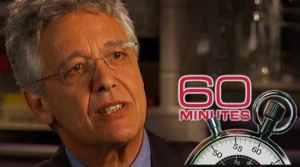
On Sunday, February 18, 2012m Irving Kirsch, and associate director of the Placebo Studies Program at Harvard medical School, who as been studying placebos for 36 years, told 60 Minutes that the difference between the perceived benefit of a placebo compared with the benefit of an antidepressant is minimal for most people.
Erick H. Turner et al., “Selective Publication of Antidepressant Trials and Its Influence on Apparent Efficacy,” The New England Journal of Medicine (2008); 358:252-260.
Irving Kirsch et al., “Initial Severity and Antidepressant Benefits: A Meta-Analysis of Data Submitted to the Food and Drug Administration,” PLOS Medicine, February 2008, Volume 5, Issue 2, e45
H. Edmond Pigott, “STAR*D: A Tale and Trail of Bias,” Ethical Human Psychology and Psychiatry, Vol. 13, No. 1, 2011.
Begley, “The Depressing News About Antidepressants,” Newsweek Magazine, January 28, 2010
The Chemical Imbalance Theory
Philip Hickey, Ph.D., “Psychiatry Did Promote the Chemical Imbalance Theory”
Todd B. Kashdan, Ph.D., “What Causes Depression? Myths About Chemical Imbalances,” March 13, 2014
Blease, “The Duty to be Well-Informed: The Case of Depression,” J. Med. Ethics, April 26, 2013
Marcia Angell, M.D., (former Editor in Chief of the New England Journal of Medicine) “The Epidemic of Mental Illness: Why?” New York Review of Books, June 23, 2011
Jonathan Leo, Ph.D., Jeffery Lacasse, Ph.D., “Psychiatry’s Grand Confession,” January 23, 2012
Cymbalta Withdrawal Legal Documents

Here, Dr. Glenmullen states that the risk rates set forth in Lilly’s own analysis are only the tip of the iceberg. The manner in which Lilly evaluated withdrawal in its own studies of Cymbalta would not have captured all of the patients experiencing withdrawal. In fact, based on Cymbalta’s comparatively short half-life, the withdrawal rate is more likely to be in the range of 66% to 78%.
Cymbalta withdrawal lawsuits summary: Personal injury lawsuits filed across the US, claim Cymbalta manufacturer, Eli Lilly and Company, misled them about the antidepressant’s propensity to induce withdrawal side effects and that, when stopping the medication, they suffered withdrawal symptoms including electric-shock like sensations in their body and brain (also known as “brain zaps”), dizziness, nausea, vomiting, vertigo, excessive sweating, insomnia, nightmares, and diarrhea.
Cymbalta Withdrawal Help: Facebook Pages
Cymbalta Withdrawal Studies
Report Your Cymbalta Withdrawal Symptoms

Report Cymbalta Withdrawal Side Effects to RxISK.org

Report Cymbalta Withdrawal Adverse Events to FDA MedWatch